Tulsa, Oklahoma · Greenwood District

Black Wall
Street

The Rise, Destruction, and Resilience of Tulsa's Greenwood District
A Beacon of Black Excellence

A Declaration

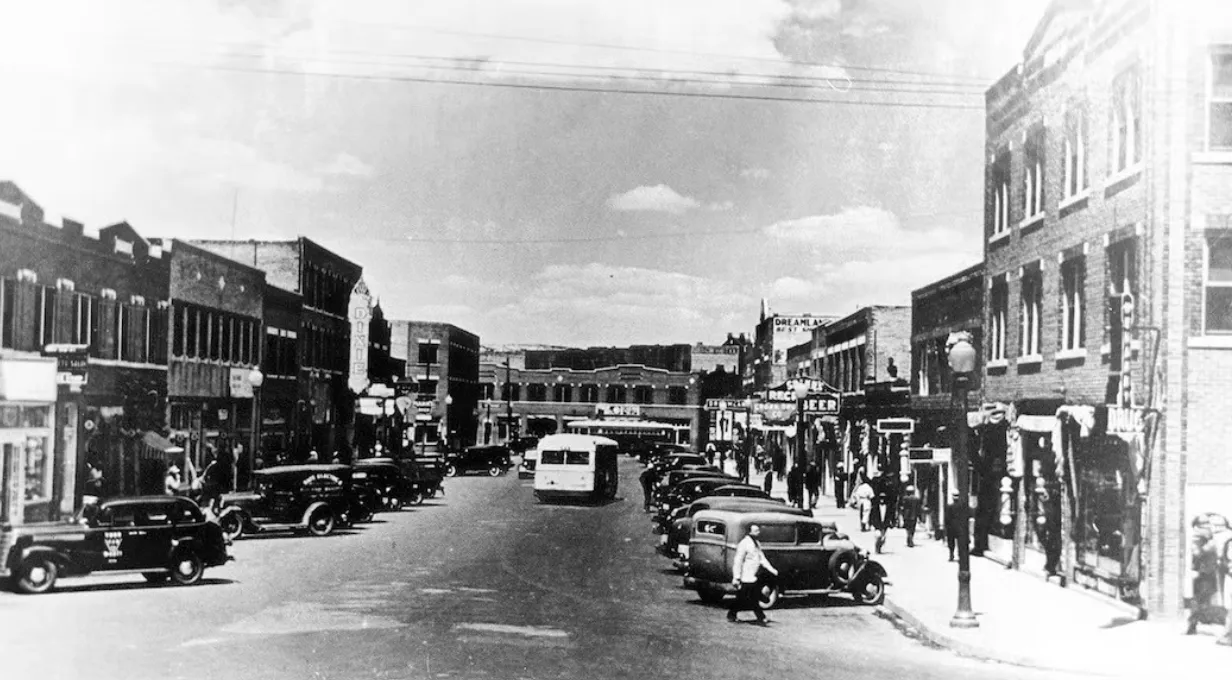
In the early 20th century, while Jim Crow laws strangled opportunity across America, an extraordinary community flourished in Tulsa, Oklahoma. The Greenwood District, known as "Black Wall Street," stood as a testament to what Black Americans could achieve despite systemic racism.

This wasn't just a neighborhood. It was a declaration of independence — a 35-block sanctuary where Black excellence wasn't the exception, it was the rule.

Greenwood Avenue in its prosperity
What Greenwood meant to the Black community was the very center of activity — commercial, social, religious. Every conceivable type of business was on Greenwood. I didn't really feel the full effects of segregation because we were living in this self-contained environment where we didn't have to go outside for anything.
— James Homer Johnson

A Self-Made Economy

By 1921, Greenwood was one of the wealthiest Black communities in America.

🏪
Enterprise
600+Black-Owned Businesses

Grocers, hotels, theaters, salons, and law offices lined Greenwood Avenue.

⚕️
Medicine
15+Black Physicians

Including the surgeon Dr. A.C. Jackson, called "the most able Negro surgeon in America."

Faith
21Churches

Anchors of community life, several of them grand brick sanctuaries.

💵
Wealth
$1M+in Black Wealth

A dollar circulated within Greenwood dozens of times before it ever left.
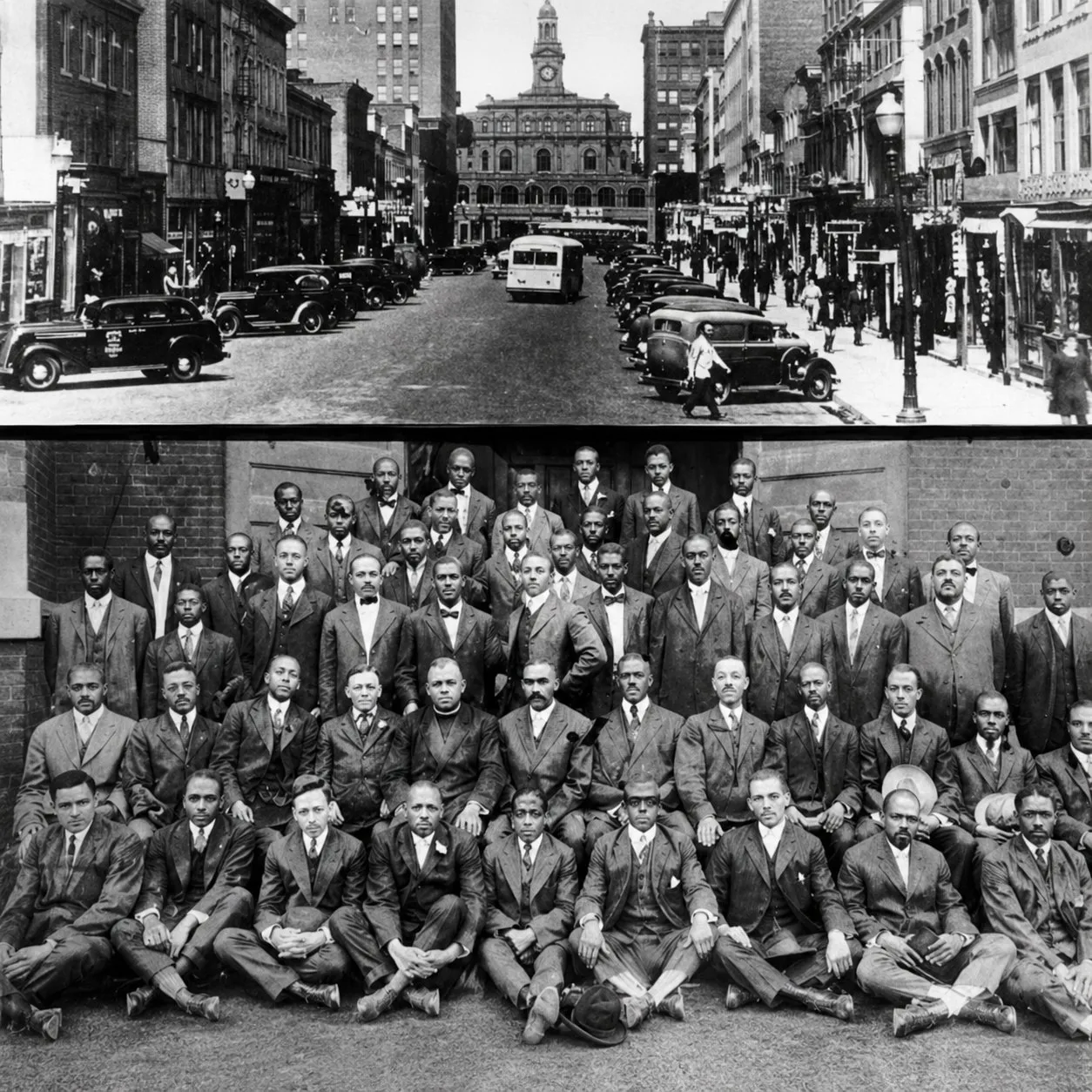
Greenwood professionals and business district
Survival Became Prosperity

A Multiplier of Wealth

Greenwood was home to Black doctors who had studied at prestigious universities, lawyers who defended their community's rights, entrepreneurs who built hotels and theaters, and educators who shaped young minds in their own schools.

Segregation forced Black Tulsans to create their own economy — but what began as survival became prosperity. Money circulated within the community dozens of times before leaving, creating a multiplier effect that built generational wealth.

May 30, 1921: A Spark

Tap to reveal
The Night It Began

May 31 – June 1, 1921

May 31 · 9:00 PM

A Stand at the Courthouse

Twenty-five armed Black men, many of them World War I veterans, arrived at the courthouse to protect Dick Rowland from lynching. They knew the law wouldn't. After the sheriff refused their help, they left — but the rumor of an "uprising" spread like wildfire.

May 31 · 10:00 PM

The First Shot

About 75 Black men returned to the courthouse, now facing 1,500 white men. Someone fired a shot. Chaos erupted. Outnumbered, the Black defenders retreated to Greenwood to protect their homes and families.

June 1 · Dawn

The Invasion

Thousands of white Tulsans — some deputized by city officials and armed by police — invaded Greenwood. They didn't come to restore order. They came to destroy.

Black Tulsans rounded up and marched to internment centers
Residents rounded up at gunpoint and marched to internment centers.
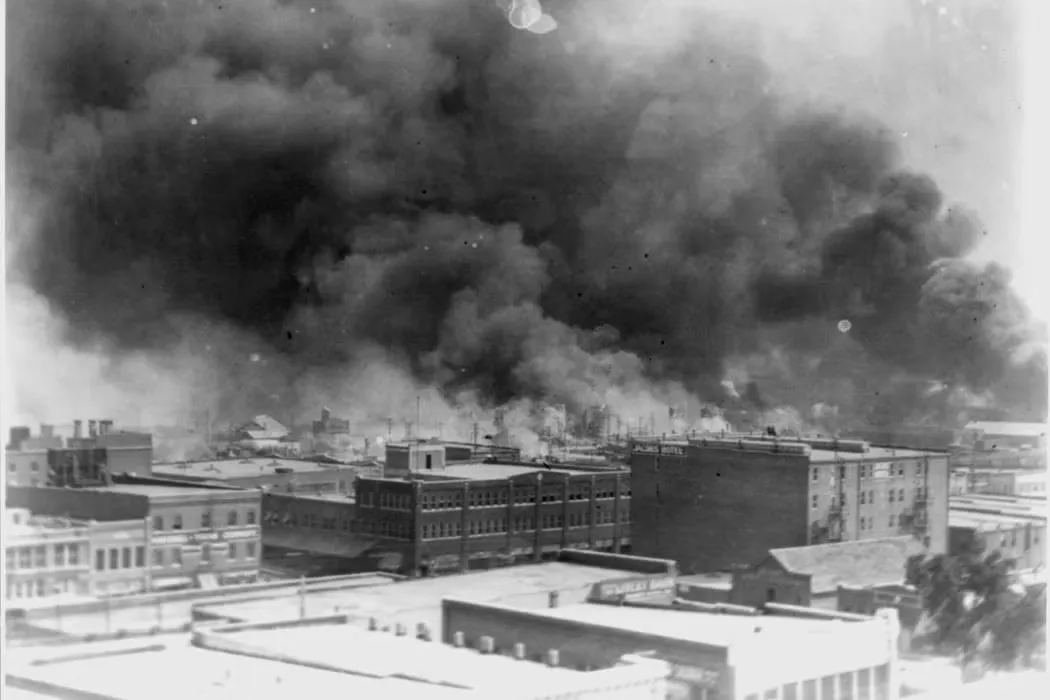
Greenwood burning during the massacre
May 31 – June 1, 1921

The Massacre

What followed was systematic annihilation. Homes were looted and burned. Businesses were reduced to ash. A hospital, a library, schools, and churches — all destroyed. When firefighters arrived to help, white rioters turned them away at gunpoint.

Some attackers used airplanes to drop incendiary devices and shoot at fleeing residents from above. Black Tulsans who tried to defend their property were shot. Those who surrendered were rounded up at gunpoint and marched to internment centers.

18 Hours

Everything, Gone

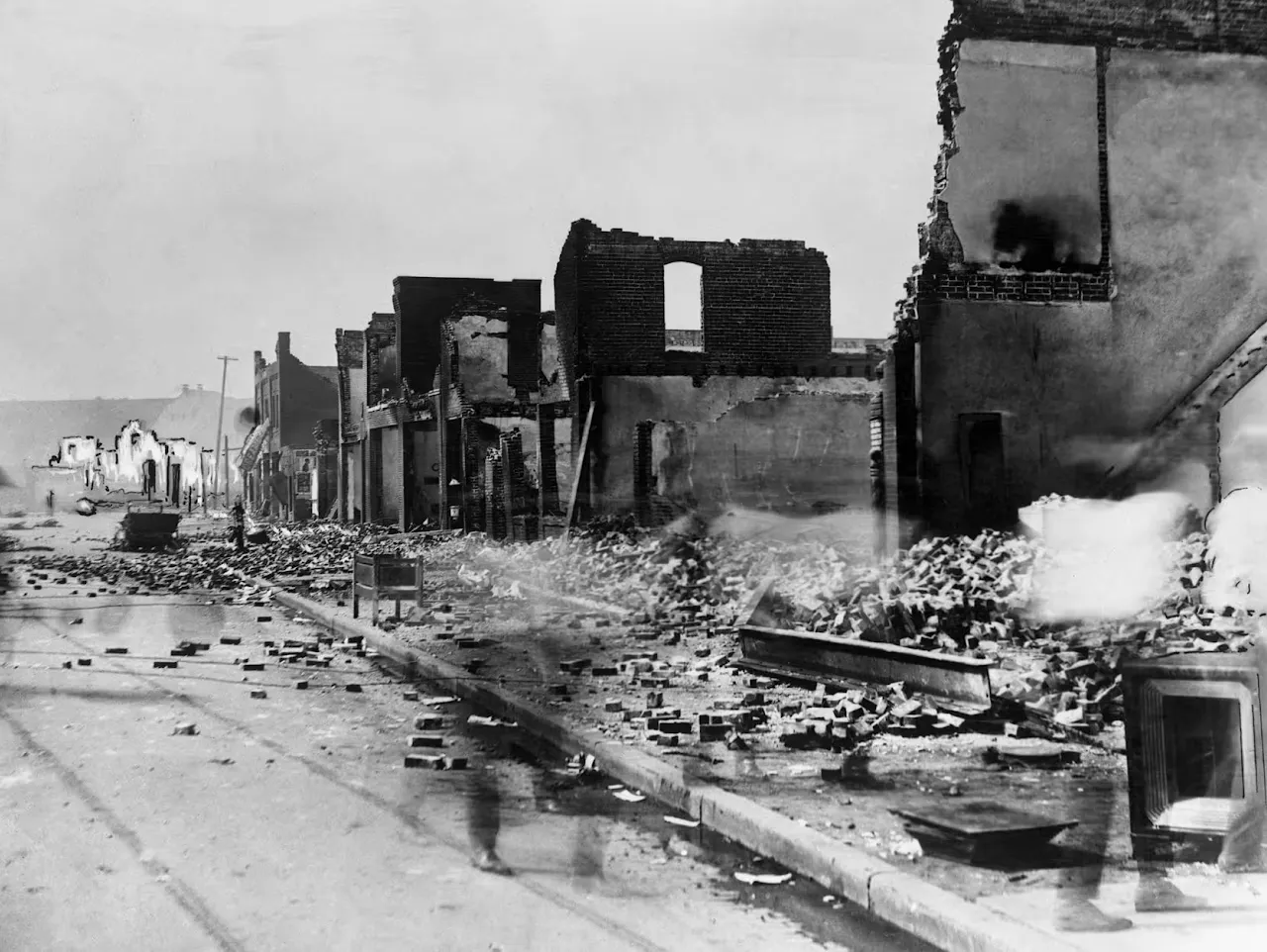
By noon on June 1, 1921, 35 city blocks lay in ruins. Over 1,256 homes burned. Everything Black Tulsans had built was gone in 18 hours.

The gutted ruins of Greenwood

The Cost of 18 Hours

🏚️
Destroyed
35Blocks Destroyed

The entire Greenwood District reduced to ruins.

🔥
Burned
1,256Homes Burned

Along with a hospital, a library, schools, and churches.

⛓️
Detained
6,000+People Detained

Black Tulsans held at gunpoint in internment centers.

🕯️
Lost
100–300Estimated Deaths

Many buried in unmarked graves, still being searched for today.

The Cover-Up

Tap to reveal
It wasn't a riot. It was a massacre. Back in 1921, they used the fact that it was a "riot" technically to not pay insurance claims. It was only because of our own strength — of saying "no, we're not going anywhere, we're going to come back and we're going to rebuild." But the government did not help with that. The business community did not help with that. It was our own strength and belief in ourselves that rebuilt Greenwood.
— Vanessa Hall-Harper
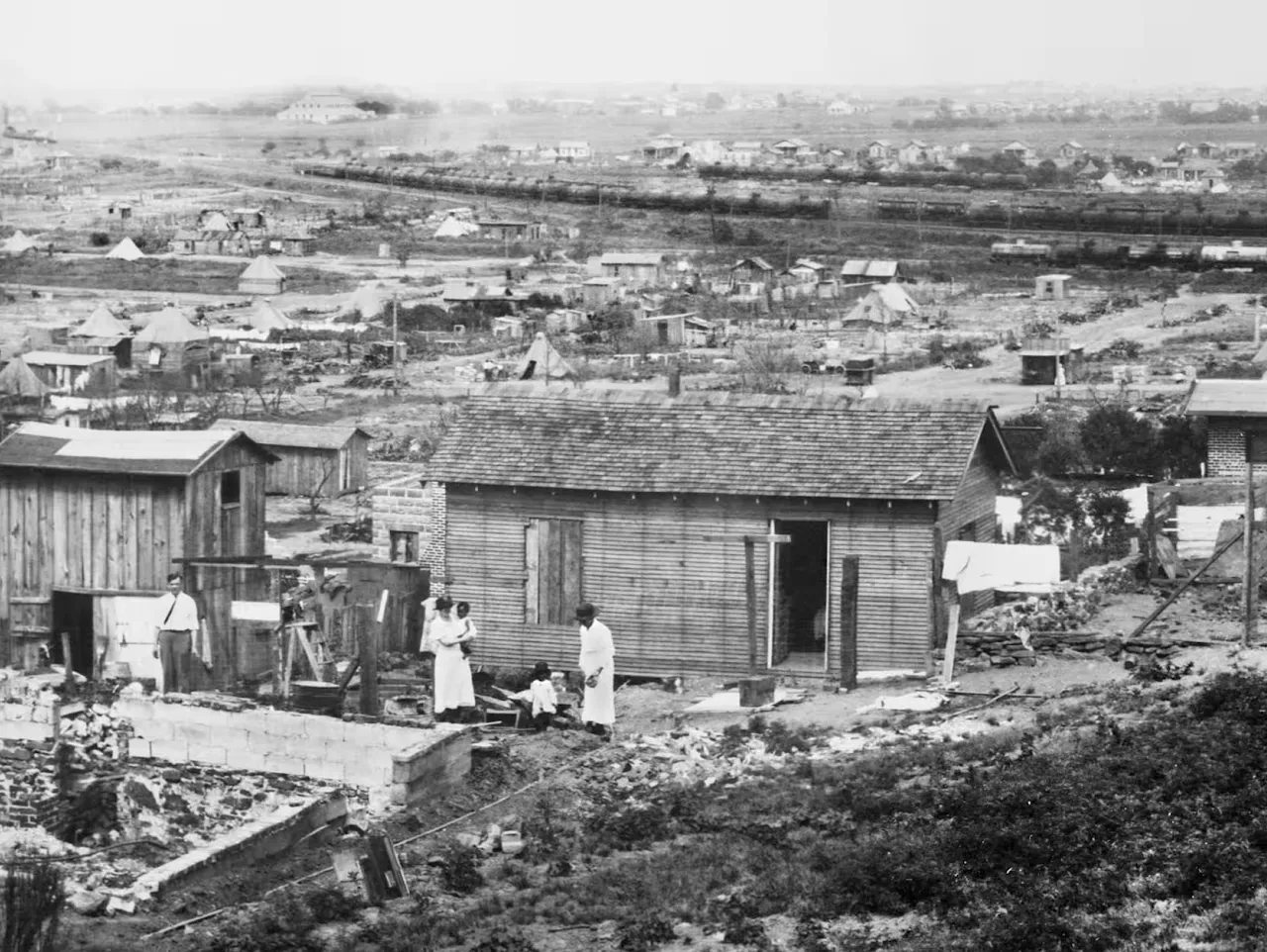
Black Tulsans rebuilding Greenwood
Resilience

Rising from the Ashes

But Black Tulsans did what they had always done: they survived. They rebuilt. Without government assistance. Without insurance payouts. With their bare hands and unbreakable will.

Within five years, they had reconstructed much of Greenwood. The same doctors reopened their practices. The same lawyers returned to fight for justice. New businesses emerged from the rubble. The community that had been targeted for extinction refused to die.

The resilience wasn't just physical reconstruction — it was spiritual defiance. Every brick laid, every business reopened, every child educated was an act of resistance against those who wanted to erase them.

The Reckoning

A Truth Uncovered

1996

A Memorial, at Last

It took 75 years for Tulsa to begin acknowledging what happened. A memorial service was finally held for the victims of the massacre.

1921 Black Wall Street Memorial
The 1921 Black Wall Street Memorial in Greenwood.
2001

The Commission Confirms

The Oklahoma Commission released its report, confirming what survivors had always known: this was a massacre, not a riot.

2020

A Nation Looks Back

As America confronted its racial history anew, searches for the Tulsa Race Massacre surged. Survivors in their 100s finally had their stories heard on national stages.

A candlelight vigil in Greenwood
A candlelight vigil marking the centennial.
Today

Still Uncovering

Excavations continue, searching for mass graves — the truth still being uncovered, one exhumation at a time.

Legacy

Undefeated

The story of the Tulsa Race Massacre isn't just about destruction. It's about what Black Americans built against impossible odds, what was stolen from them through racist violence, and how they refused to be broken.

It's about doctors and lawyers and teachers and entrepreneurs who dared to thrive — a community that created its own prosperity in a nation that tried to deny them everything.

Black Wall Street may have been destroyed, but its legacy — of Black excellence, self-determination, and unshakeable resilience — remains undefeated.

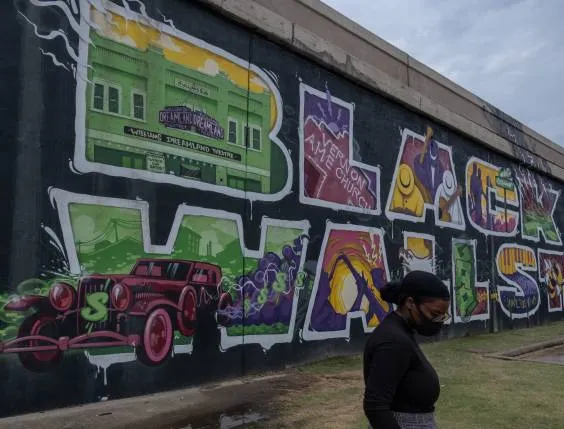
The Black Wall Street mural in modern Greenwood

"What does remembering Black Wall Street ask of us today?"

Log in or create a free account to record your reflections in your private journal.