A Digital Exhibit

"We Humans"

Educating Pittsburgh on Race in the 1950s

In the years following World War II, global shock over the Holocaust, growing demands to end race-based discrimination, and shifting ideas in science created a charged and consequential environment for social change. This digital exhibit shares one story of how civic, labor, and education leaders in Pittsburgh responded to that moment.

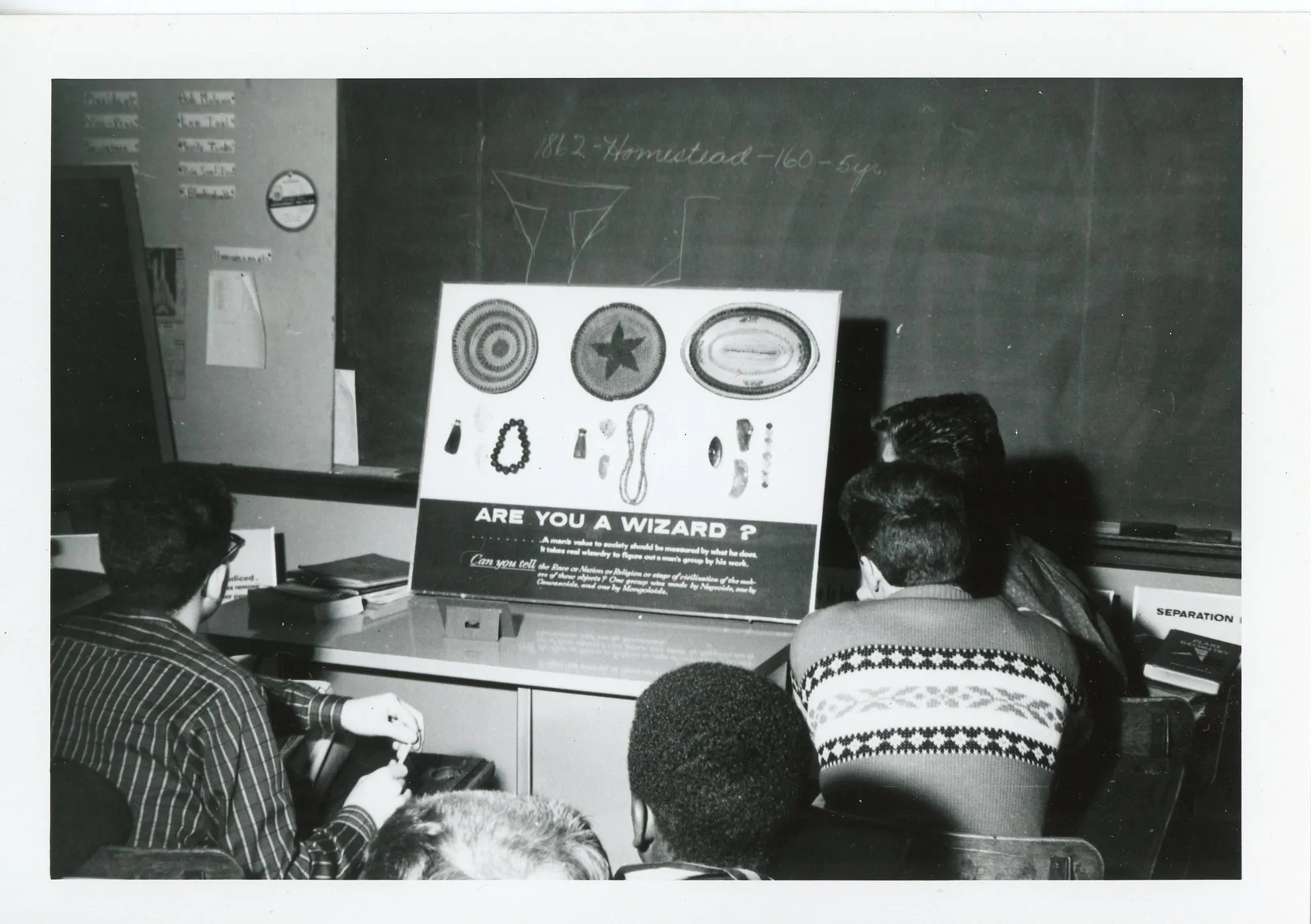
Students hearing the "We Humans" curriculum, Monongahela High School, 1959. Photograph by Michel Chalufour. Courtesy of Carnegie Museum of Natural History, Library & Archives.

Introduction

What feels familiar and unfamiliar about this story?

"We Humans" was an exhibit on race and racism developed by two curators of anthropology at the Carnegie Museum, James Swauger and Don Dragoo. Through punchy rhetoric informed by the science of the day, they encouraged workers, students, and citizens to question their assumptions about race and to value the lives and contributions of all people. It debuted in downtown Pittsburgh in 1955 and later reached a national audience through portable versions and publications. The exhibit was jointly planned by the museum, the United Steelworkers of America, Mayor David L. Lawrence's Civic Unity Council, and Pittsburgh Public Schools. "We Humans" shows how a version of anti-racism was made an urgent public priority across the United States in the 1950s — but it also reveals the pitfalls of the institutional and scientific tactics of the time. As you explore, ask yourself what its ambitions and shortcomings might teach people today. *Please note that this exhibit includes racial terminology and imagery that are outdated and offensive.*

How did "We Humans" come to be?

Origins

"We Humans" emerged as one of many responses to local, national, and global conversations about race and discrimination in the 1950s. Civic, labor, religious, and community leaders, alongside academics, collaborated to counter both anti-semitism and Nazi race science, and anti-Black racism and segregation.

Of particular relevance were discussions convened by the Committee on Civil Rights of the United Steelworkers of America, and the first UNESCO Statement on Race of 1950.

United Steelworkers of America

The Civil Rights Committee of the United Steelworkers (USW), established in 1948, organized seminars where leaders in labor, education, religion, and the social sciences debated how to mitigate prejudice in the workplace and in society.

Carnegie Museum curator James Swauger was invited to a USW "Seminar on Human Relations" in 1951. He brought museum artifacts made by diverse cultural groups and — presenting them without identifying information — challenged participants to racially label or judge them. That collaboration eventually created the opportunity for "We Humans."
UNESCO Statements on Race

In 1949, mostly anthropologists gathered in Paris to draft the first UNESCO Statement on Race (1950), aiming to eliminate racial prejudice through knowledge. The status of racial categorization in anthropology was shifting, even as many scholars still clung to now-discredited practices of physical anthropology.

Core messages — shared later by "We Humans" — held that humans are one species and that "races" were not pure, superior, or inferior, and did not determine intelligence or culture. Yet the statement also asserted three racial groups, combining progressive ideas about equality with biological categories now understood as inaccurate and offensive.

Display & Reception

Where was it shown, and what did people say?

July 1955

"Are You Ethnocentric?"

A Pittsburgh Sun-Telegraph editorial praised the exhibit for challenging the belief that one's own group is superior. Some readers doubled down on their sense of superiority — one even claimed the anti-ethnocentric message would lead to Communism.

Are You Ethnocentric? editorial
"Are You Ethnocentric?," Pittsburgh Sun-Telegraph, July 8, 1955.
Ethnocentric reader responses
"Ethnocentric," Pittsburgh Sun-Telegraph, July 15, 1955.
February 1956

Into the schools

A modified, portable version tours Pittsburgh Public, parochial, and regional schools as a social-studies module. A USW-funded booklet circulated the content more broadly; the tour continued at least through 1959.

Teacher with a portable We Humans panel
A teacher at Monongahela High School with a portable "We Humans" panel, 1959.
March 1956

Eleanor Roosevelt praises it

First Lady Eleanor Roosevelt received a copy of the booklet from Swauger and praised it in her column "My Day," writing that "North and South alike must learn to evaluate human beings as such." Her column drew further interest.

June 1956

In the Courier

Ric Roberts wrote about the exhibit and its school tour in The Pittsburgh Courier. Its message — that humans differed by "type" but were fundamentally united and equal — resonated.

Pittsburgh Courier article
Ric Roberts, "School, Churchmen Agree 'Race' is Mythical," Pittsburgh Courier, June 2, 1956.
November 1959

A national tour

With support from the American Jewish Committee and USW, a second portable version toured libraries nationwide. This month it opened at the San Francisco Public Library.

We Humans at the San Francisco Public Library
The temporary installation of "We Humans" at the San Francisco Public Library, 1959.
October 1963

The Indiana Centennial

"We Humans" is displayed at the Indiana Centennial in Indianapolis, one of many stops — including Miami, Connecticut, and Detroit — on its long national journey.

We Humans on view in Indianapolis
"We Humans" on view in Indianapolis, 1963.
We Humans on view in Indianapolis
"We Humans" on view in Indianapolis, 1963.
What was actually in "We Humans"?

The Original Panels

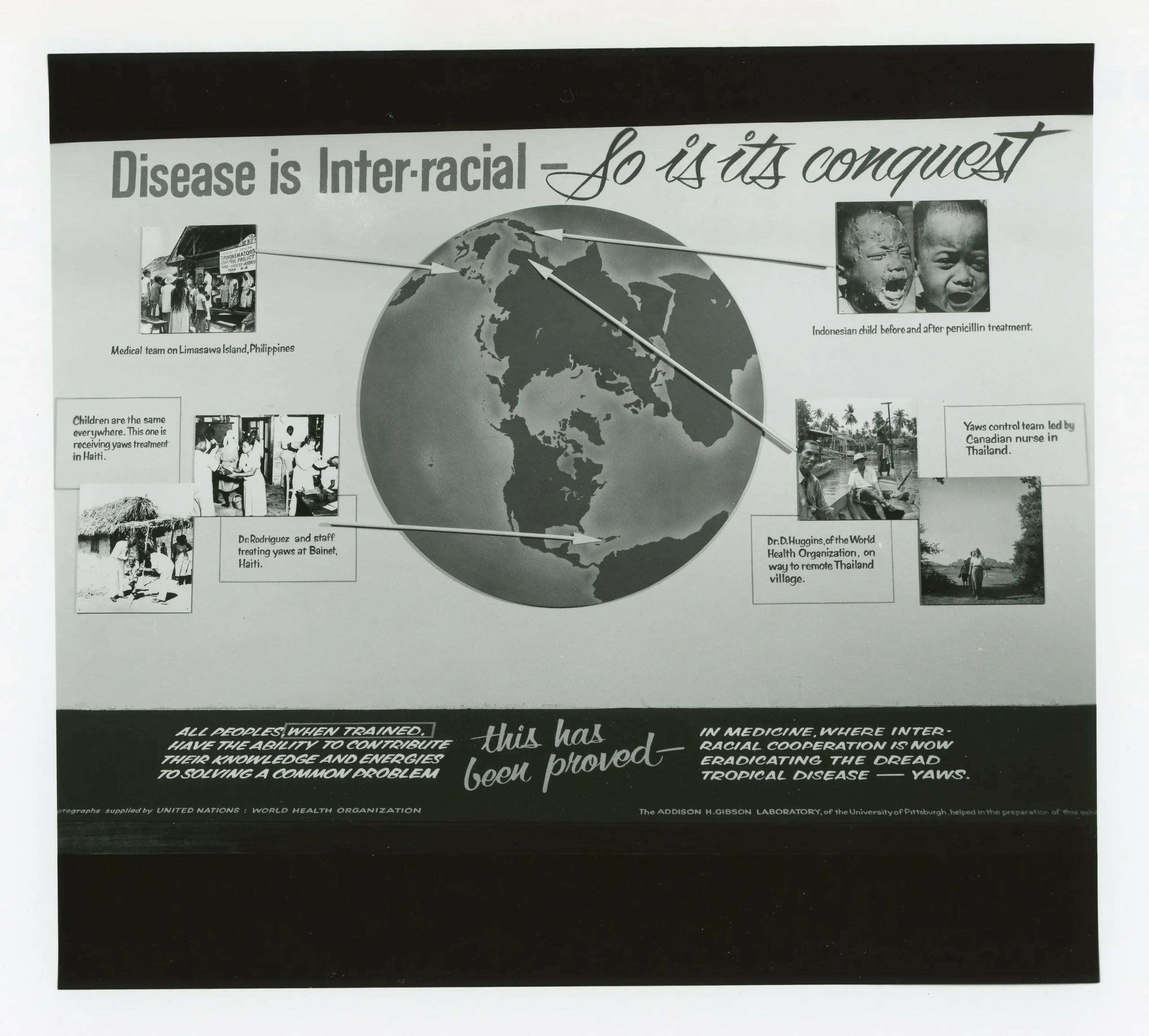
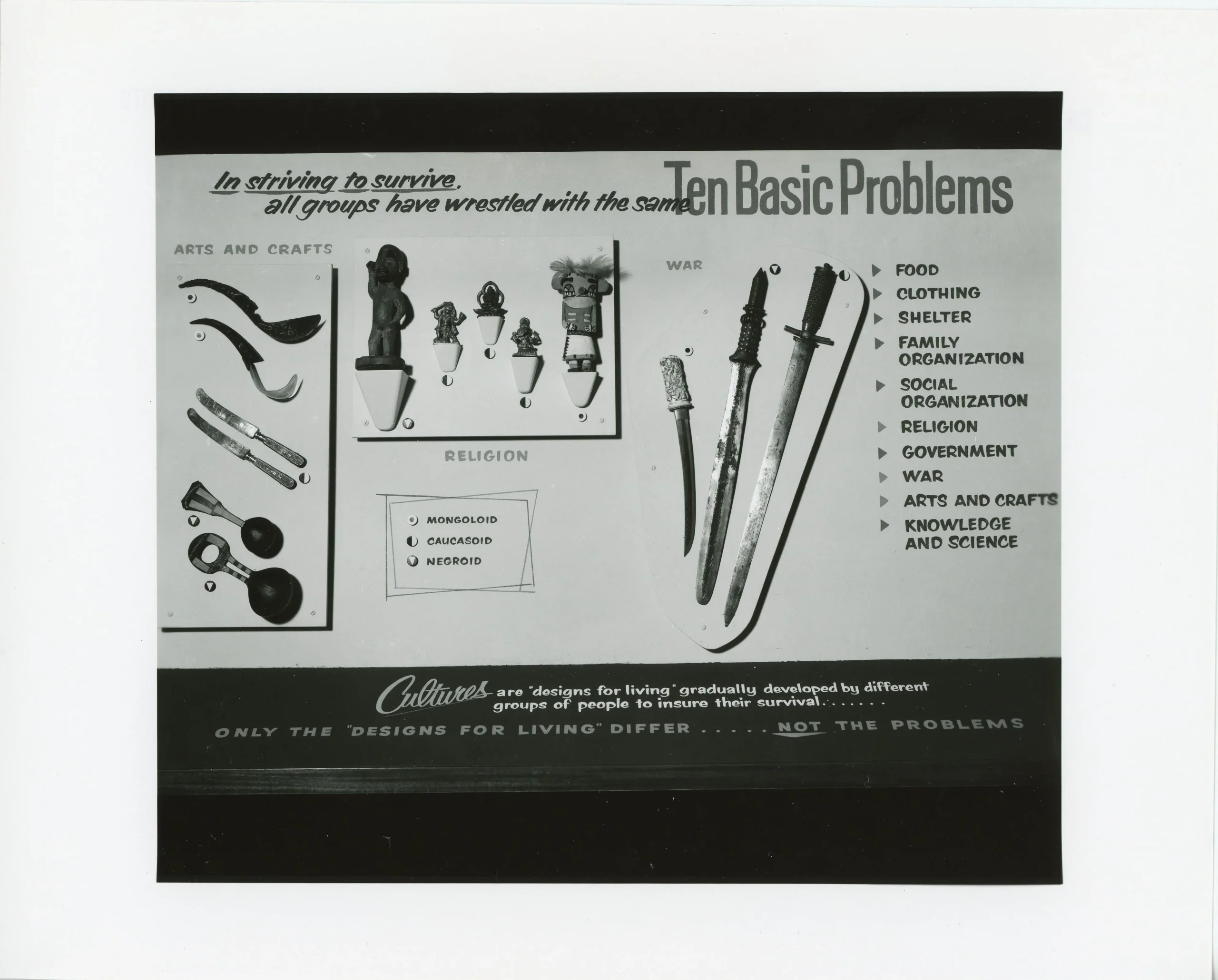
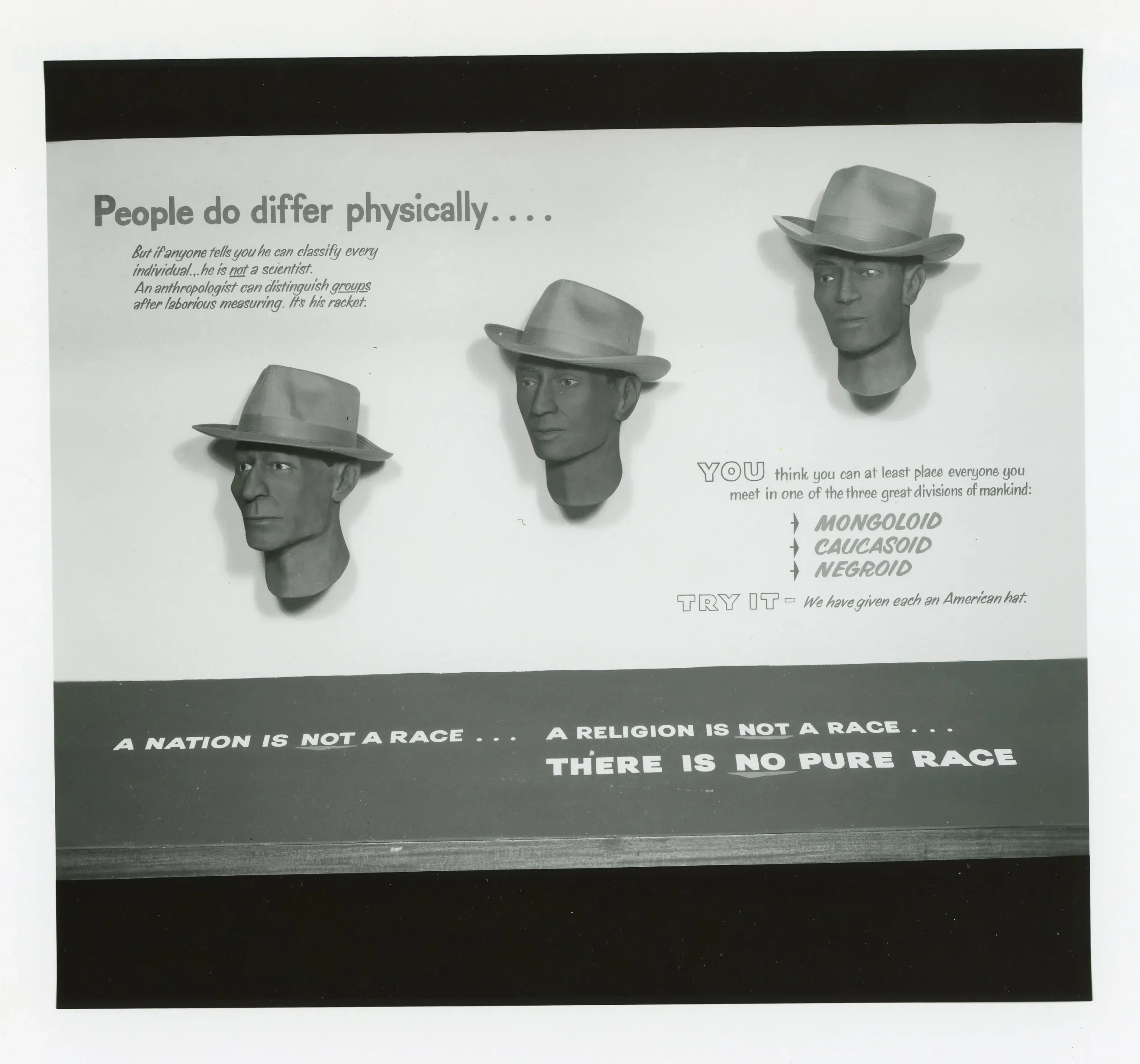
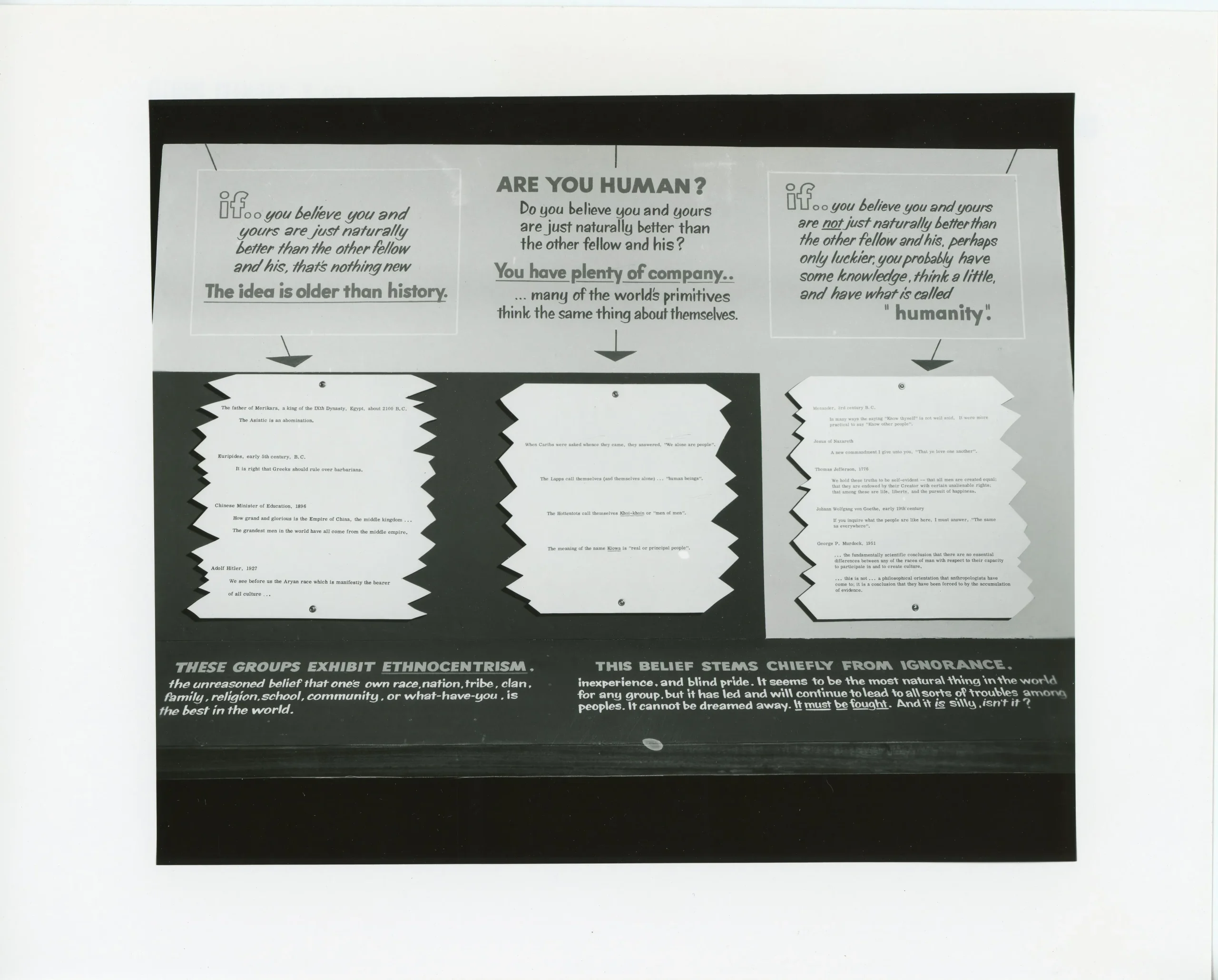
"We Humans" consisted of eight panels displayed in four double-sided cases. Each case paired one panel ("Panel A") about human biology and genetics with another ("Panel B") about human culture. Using bold rhetoric, museum artifacts, and mannequin heads, Swauger and Dragoo tried to unsettle assumptions about race — in ways that today appear outdated, inaccurate, and offensive, awkwardly shifting between racial division and harmony.

We Humans, Case I, Panel A
The Original Panels

Eight Panels, Four Cases

Click any panel to enlarge. "Panel A" addressed human biology; "Panel B" addressed human culture.

Case I, Panel A

Case I, Panel A

Challenges viewers to identify three mannequins by "race," implying difference is hard to see — while still presenting the era's now-invalid racial "types" as real and knowable.

Case I, Panel B

Case I, Panel B

Argues "ethnocentrism" is human but can be overcome by knowledge — quoting figures from a pharaoh and Euripides to Hitler, Jesus, and Jefferson, while privileging Western voices.

Case II, Panel A

Case II, Panel A

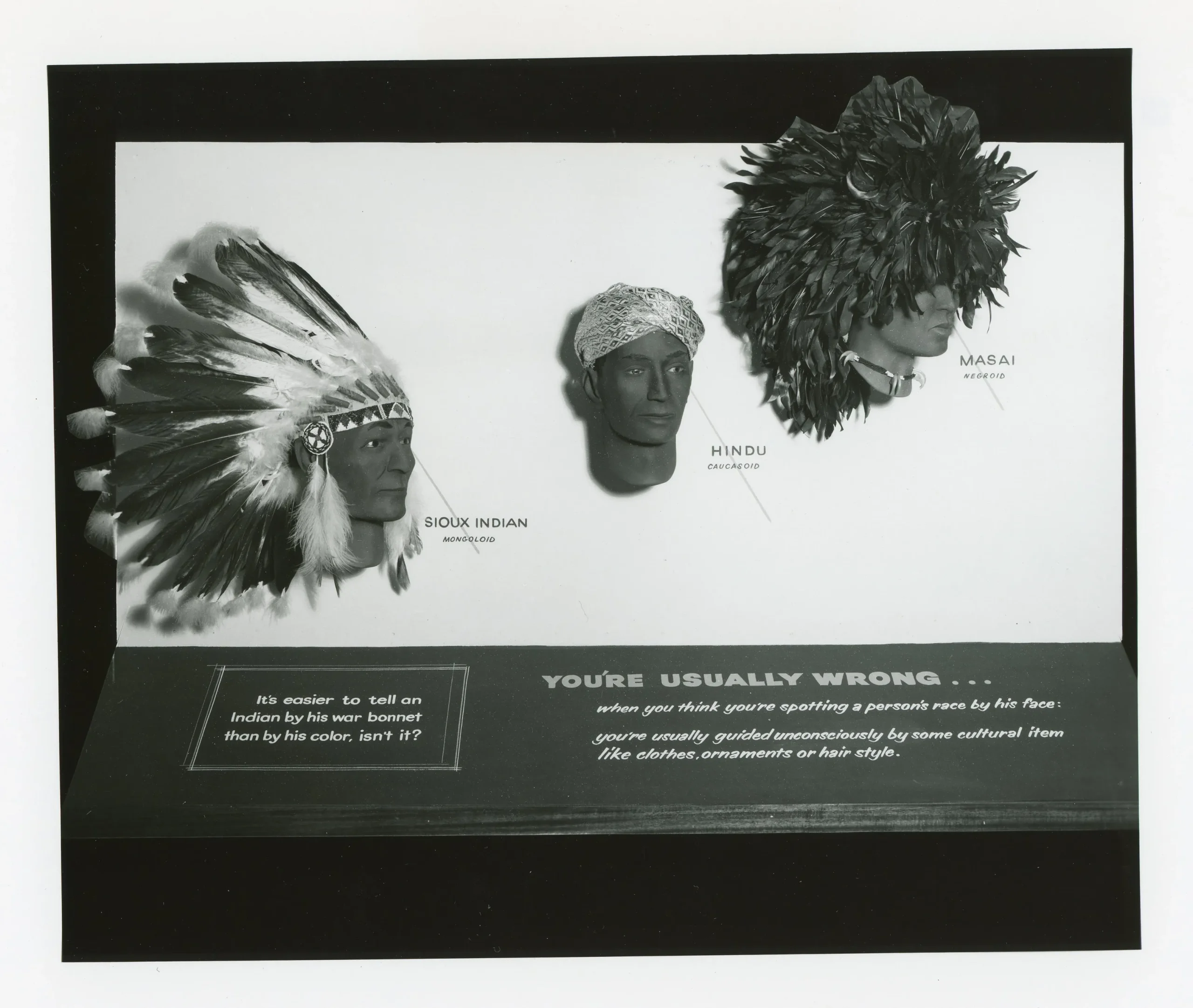
The mannequin heads return wearing headdresses from the museum's collection — meant to show we read cultural, not racial, cues, but mislabeling and decontextualizing the objects.

Case II, Panel B

Case II, Panel B

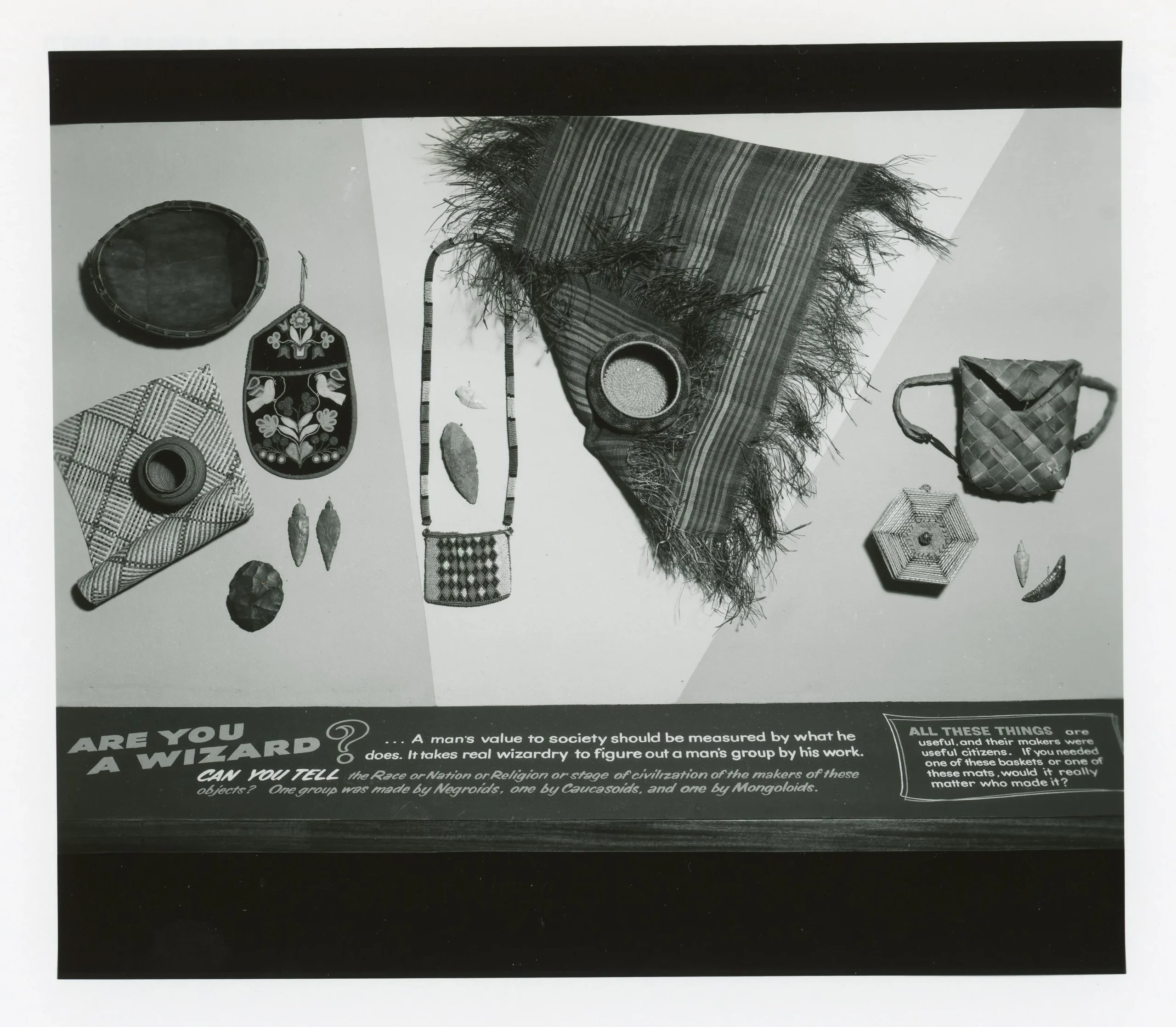
Similar objects from different regions, pinned unmarked. "Are you a wizard?" it asks. It closes: "If you needed one of these baskets... would it really matter who made it?"

Case III, Panel A

Case III, Panel A

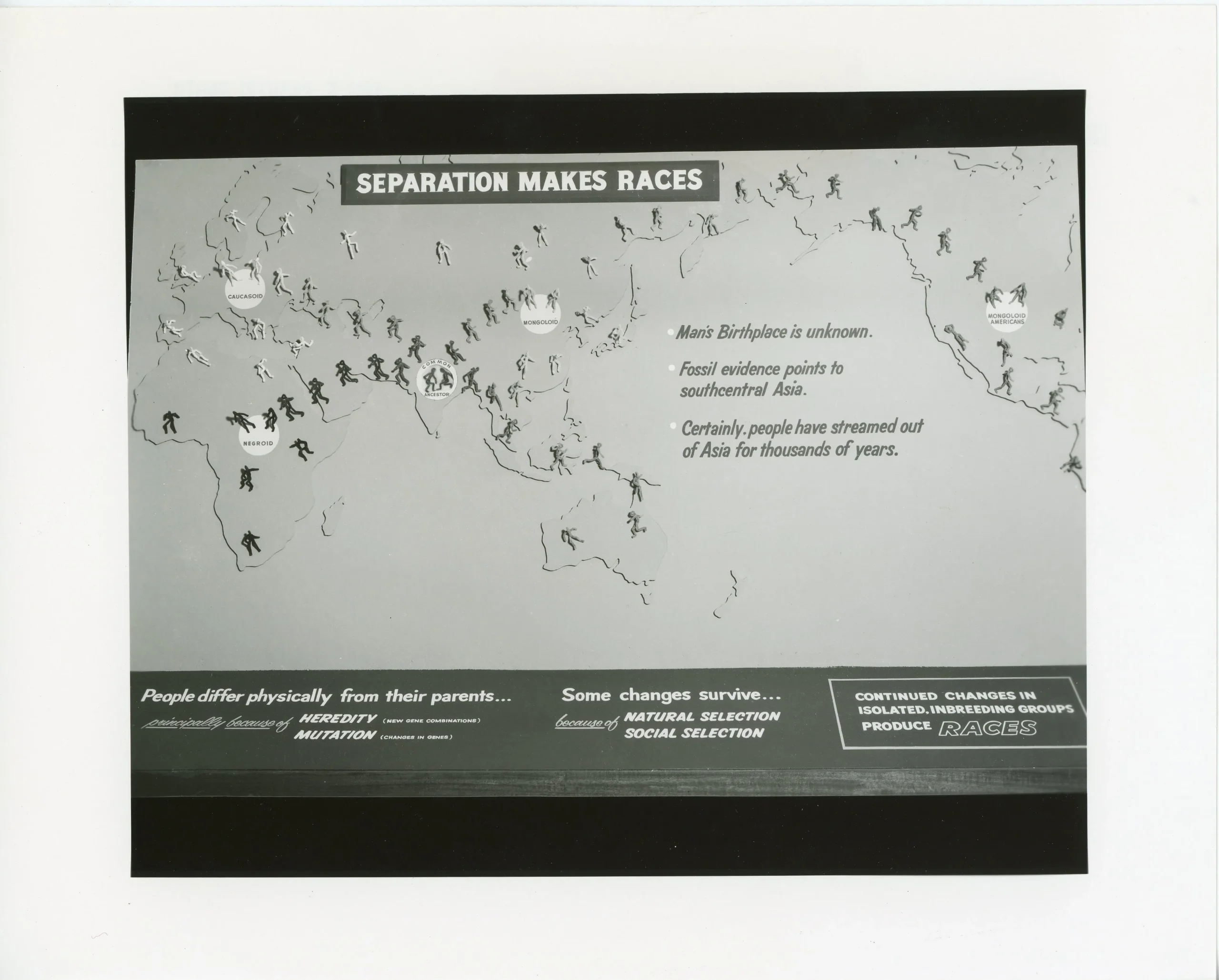
A world map and color-coded figurines illustrate variation from geographic isolation — but wrongly frame it as "racial" and place humanity's origin in Asia rather than Africa.

Case III, Panel B

Case III, Panel B

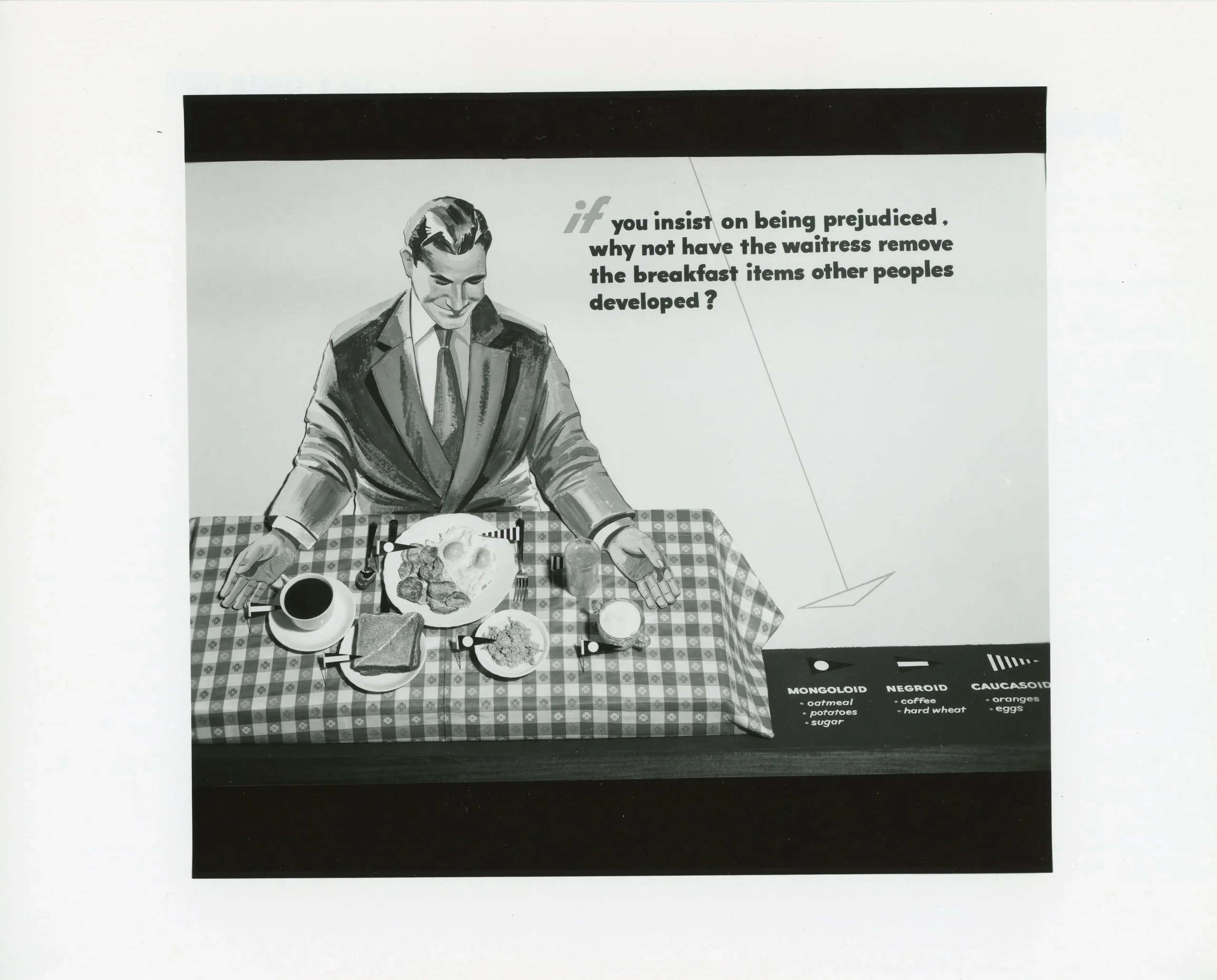
A man before a hearty breakfast of globally sourced foods shows racism's incoherence. Notably, "the waitress" is the only feminized person mentioned in all of "We Humans."

Case IV, Panel A

Case IV, Panel A

A concluding biology panel, drawing together the exhibit's claims about human variation and unity.

Case IV, Panel B

Case IV, Panel B

A concluding culture panel, closing the paired sequence of "We Humans."

How should we think and feel about "We Humans" today?

Conclusion & Reflection

Save your reflection

Prompt: "We Humans" made anti-racism an urgent public priority in the 1950s — yet leaned on scientific and institutional tactics we now recognize as flawed. What might its ambitions, and its shortcomings, teach us today?

Your saved responses

These responses are tied to your account and this reflection.

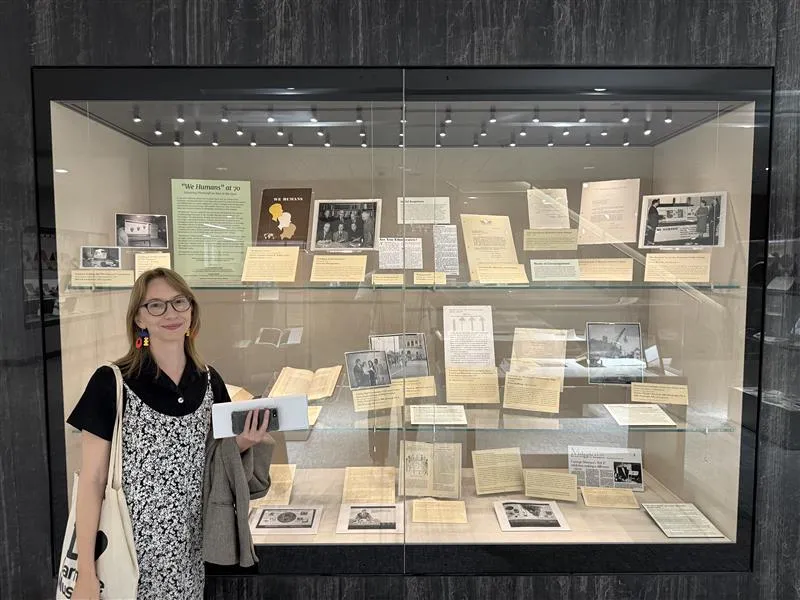
Curator Deirdre Madeleine Smith in front of the We Humans exhibit, 2025
Curator Deirdre Madeleine Smith in front of the "We Humans" exhibit in Hyland Gallery, 2025. Photograph by Ron Idoko.
About

About this exhibit

This exhibit was developed in 2025–2026 by Deirdre Madeleine Smith, a Teaching Assistant Professor in the History of Art and Architecture Department at the University of Pittsburgh and Curator of Museum Studies and Art at Carnegie Museum of Natural History. An earlier version was hosted in the Hyland Gallery at Hillman Library, co-curated by student intern Lindsey Kenny with University of Pittsburgh Library System staff Megan Massanelli and Madeleine Chesek-Welch.

About

Credits, Acknowledgements & Sources

Acknowledgments

Thanks to the following individuals for their support in the development of this project:

Gretchen Baker, Jenise Brown, Marie Corrado, Amy Covell-Murthy, Sarah Crawford, Sydney Dominick, Christopher Fleisher, Kristina Gaugler, Laurie Giarratani, Ron Idoko, Morgan Riggenbach, Keirstin Rotharmel, Ellen Sanin, Rachel Thomas-Beckel, Breann Thompson, Annick Vuissoz, Amy Whipple, Ginger White, Gina Winstead.

Sources consulted and recommended

Archives: Carnegie Museum of Natural History Section of Anthropology Archives; CMNH Library & Archives; Heinz History Center (Pittsburgh Public Schools Records); University of Pittsburgh Library System Archives & Special Collections (Francis C. Shane Papers, 1942–1969).

Books & articles: Anthony Hazard, Postwar Anti-racism (Palgrave, 2012); James B. Stewart, "Civil Rights and Organized Labor" (2005); Tracy Teslow, Constructing Race (Cambridge, 2014); Joe W. Trotter Jr. & Jared N. Day, Race and Renaissance (Pittsburgh, 2010).