
The Racial Equity Consciousness Media Hub has been a project in motion for many years. It began as the brainchild of Ron Idoko and Justin Hansford in 2021 at the United Nations Permanent Forum for People of African Descent. Following this, Ron began to recruit students at the University of Pittsburgh’s Frederick Honors College to pursue the goal of creating a way to spread racial equity solutions and find a vaccine for racism through collaboration.
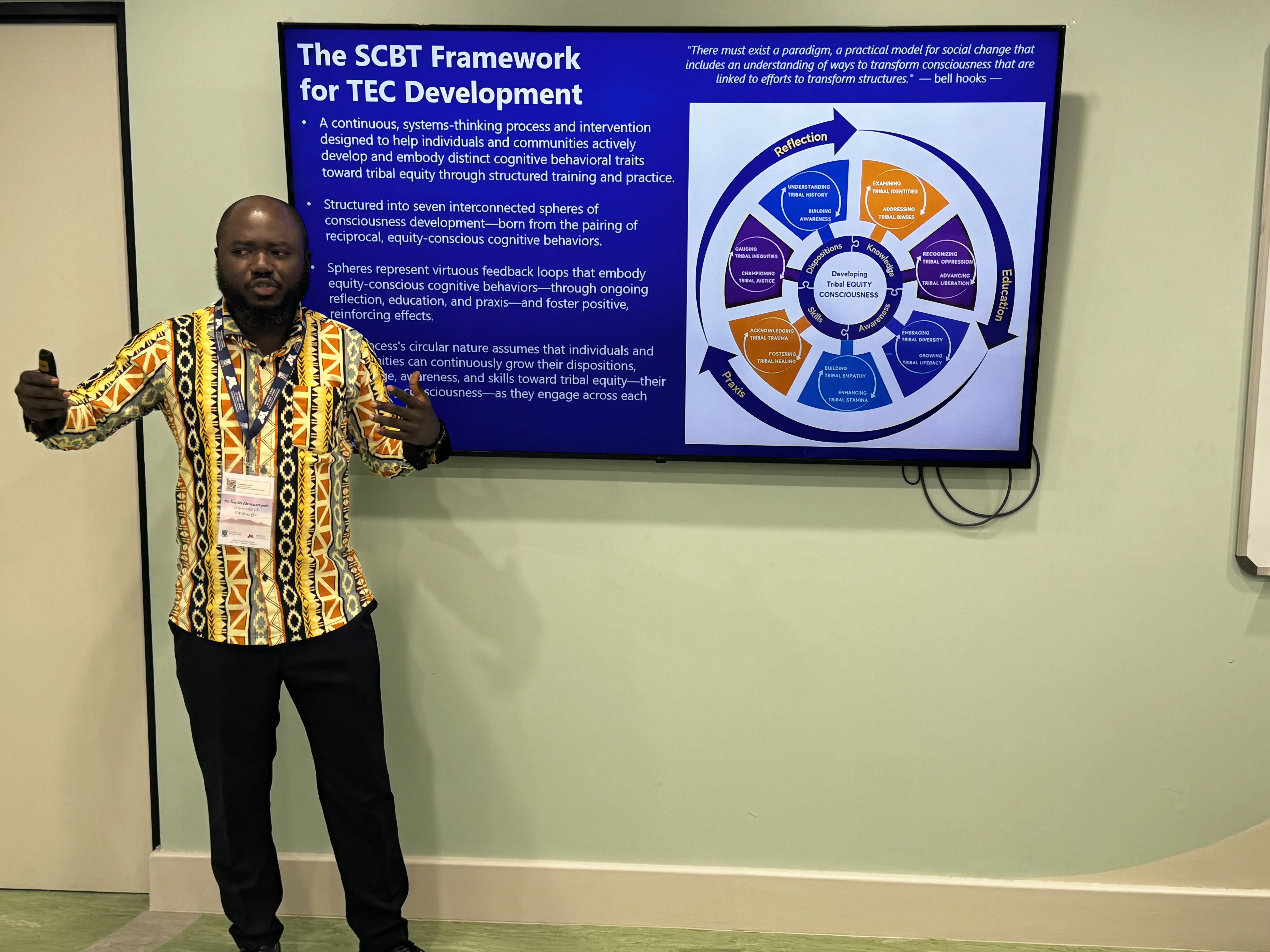
The project originally took the form of a database. The thought process behind the database was a way for those doing research on racial equity to connect and collaborate wherever possible. While many across the globe are doing great research, often these researchers are siloed from those in their communities who may be doing similar work. An additional aspect that the database aimed to capture was getting those who could utilize these resources in contact with them. Racial equity research is useless if it is not used by those most afflicted by systemic racism. The database was built around two frameworks: the UN Sustainable Development Goals, 17 interconnected goals aimed to promote a more sustainable world, and the Racial Equity Consciousness Institute Spheres, developed at Pitt by Ron Idoko, which aim to instill attitudes of racial equity in individuals.
The database was first unveiled at the UN Permanent Forum on People of African Descent in Geneva, Switzerland in 2024. There it was met with enthusiasm from those across the globe who are advocates for racial equity. The database continued to be developed and was again showcased at the Forum in New York in 2025.
A roadblock to the database came when it was being shown to those who were not involved in racial equity advocacy and research. While those in the realm of equity were very enthused with the project, those on the outside did not grasp how they would be able to use the database to their advantage. A project like this would not be effective without widespread usage, so the decision was made to pivot to the current media hub. With this media hub, we are better equipped to highlight racial equity in everyday people, while still highlighting the work that millions of people are doing for a more equitable world. With a multi-media website, we can not only promote racial equity but make it fun and engaging as well.